.png)

ULS Newsletter: The Jail and Prison Advocacy Project
The Jail and Prison Advocacy Project (JPAP) is a program within Disability Rights DC. JPAP advocates for returning citizens with psychiatric disabilities, intellectual disabilities, traumatic brain injuries, and co-occurring substance use disorders in DC.
This is a special edition newsletter focusing on JPAPs work in the DC Community. Visit our website to learn more.
Ringing in the Season of Giving
As we enter the season of giving, we’re reminded that generosity and solidarity are more important than ever. For many of the people we serve through the Jail & Prison Advocacy Project (JPAP), this time of year brings uncertainty and hardship. For many weeks, the federal shutdown threatened access to critical supports like SNAP benefits, while unhoused residents across DC are left exposed to the cold weather—but not cold enough to allow them to someplace to stay inside during the day.
At JPAP, we’re committed to standing alongside our clients as these challenges grow. We are asking for your support to help us provide one of the most fundamental forms of care: food. A donation of any size can help us make sure our clients—all of whom are returning citizens and many are unhoused—have access to the basic nourishment they need to stay safe and healthy through the winter.
In this fall edition of our newsletter, we’ll share how JPAP continues to fight for the rights of and dignity of people with disabilities in DC’s criminal legal system and our newest initiative SNAPback!, which we started this November to help our community members who rely on government support to remain fed.
Help us SNAPBACK!
After the longest federal shutdown in history, uncertainty persists for the thousands of DC residents who depend on federal nutrition assistance programs to survive. SNAP recipients have endured weeks of food insecurity while being stuck in the middle of federal decisions outside of their control.
For many of JPAP’s clients, the lack of access to SNAP benefits has meant going without food. Although JPAP receives grants that allow us to take clients grocery shopping, the grants are not flexible enough to provide emergency food assistance to multiple people at once. To help address this urgent need, JPAP launched SNAPback!, a new emergency initiative to provide immediate food support for our clients who have not received their SNAP payments this month or are otherwise experiencing hunger.
Through SNAPback!, we’re distributing $50 Giant gift cards to current and past clients who have reached out to us with hunger concerns. These cards provide temporary relief, but they only go so far—$50 cannot cover a full week of groceries, certainly not for families. JPAP is also stocking up our in-house “snack bank” so we can provide immediate relief to hungry clients.
Because this is an urgent effort, requiring maximum flexibility, we cannot use our regular grant funding to respond quickly or to buy larger gift cards. That’s why we’re turning to you. Your donation—no matter the size—can directly help feed someone in our community who is struggling to meet their most basic needs.
Please donate today to help us keep our clients nourished and supported during this uncertain time. Together, we can make sure that the returning citizens JPAP works with do not go hungry or become desperate.
Mr. M's Job Success
Returning from incarceration can be disorienting, and JPAP works to help clients connect with resources that can support their transition in whatever ways possible. Mr, M wrote to JPAP a few months before his release, knowing that there were obstacles he needed a little extra support to tackle.
After being released, Mr. M met his Reentry Advocate Cami, who helped him apply for SNAP and Medicaid. They worked together to find him yearlong housing at Mulumba House after spending his first month of release in a halfway house. Mr. M knew that he wanted to work, so the first thing that he did was start applying for jobs. This proved to be more challenging than he expected. He submitted application after application and made it through rounds of interviews, but he inevitably failed background checks due to his incarceration.
He had finally secured an electrician job that was due to start on October 1st, but the federal shutdown paused the hiring process. Mr. M couldn’t wait for the government to reopen- he wanted to start saving money as soon as possible. He got to work learning about what other opportunities were available to him and discovered DC Central Kitchen, an enterprising nonprofit that combats hunger and poverty through job training. He applied to their Culinary Job Training program, a 14-week course that teaches culinary skills and career readiness.
Today, he is in his 4th week of the program, learning how to prepare chicken in a commercial kitchen. “It is really intense,” Mr. M said about the program, “I am learning cooking skills and professional skills.. We also talk about the barriers we have faced in life, and they teach us how to improve our emotional skills. We focus on where we are trying to go in life.”
In addition to this program, Mr. M got a weekend job as a community ambassador in Adams Morgan. As part of the Clean Team, he helps maintain the parks and sidewalks of Adams Morgan, removing trash and recycling. While the position is only part-time, he is keeping an eye out for a full-time position to become available. In the meantime, he is enjoying being a part of his community and keeping the streets of DC clean!
Once he finishes the Culinary Job Training program, there are full-time positions within DC Central Kitchen that Mr. M likes the sound of- either working in transportation or facilities for the organization that is helping him get back on his feet.
Whatever he may end up doing in the future, he is looking at a few different opportunities to see what best fits his needs. Mr. M likes to keep his options open and keep a smile on his face. He is grateful to Cami, his reentry advocate, who helped him get connected with the services he needed to get back on track.
Client Art Feature


Images from a comic book created by a former JPAP client, submitted to the newsletter.
Court Finds Deployment of Nation Guard in D.C. Unlawful
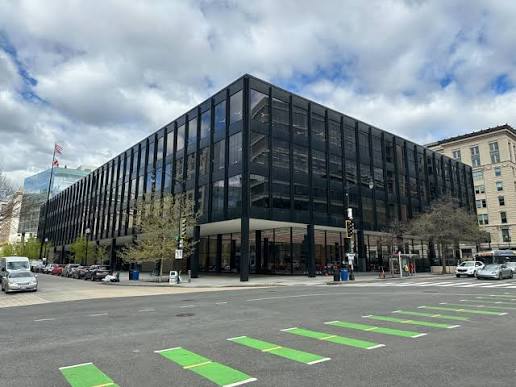
On September 16th, University Legal Services joined eleven other civil rights and advocacy groups in filing an amicus brief in support of the District of Columbia's lawsuit challenging President Trump's unilateral decision to deploy the National Guard in DC.
Last week, on Thursday, US District Jidge Jia M. Cobb ordered the Trump administration to stop its monthslong patrol of DC neighborhoods, declaring that the military takeover in Washington, D.C., illegally intrudes on local officials’ authority to direct law enforcement in the district.
However, this order was put on hold for 21 days to allow the Trump administration time to appeal.
After her ruling, Schwalb called for troops to be sent home. “Normalizing the use of military troops for domestic law enforcement sets a dangerous precedent, where the President can disregard states’ independence and deploy troops wherever and whenever he wants — with no check on his military power,” Schwalb said.
ULS celebrates this legal victory. This decision reaffirms a crucial principle: no President can send military troops into DC without legal authority. It’s a powerful reminder of the importance of public accountability, civil rights, and DC autonomy.
Telesox: A Creation by Mr. H
When Mr. H was released from incarceration, he knew one thing for certain—he wanted to work for himself. “After so many years inside, I didn’t think I’d have enough time left to build up a traditional job and retirement,” he shared. “My goal was to be my own boss, to create something I could build and one day pass down to my kids.”
That mindset led him to start Haulmasters, a bulk trash removal and facilities maintenance company he founded in 2017. Haulmasters has taken on DC contracts and continues to grow as Mr. H works toward making it self-sustaining.
Mr. H connected with JPAP Reentry Counselor Robert years ago, first meeting him while incarcerated and maintaining the relationship ever since. “JPAP has been a reliable and credible resource,” he said. “They’re not just talk—they really assist you with the tough situations that come up in life. I’m satisfied and grateful for everything they’ve done.”
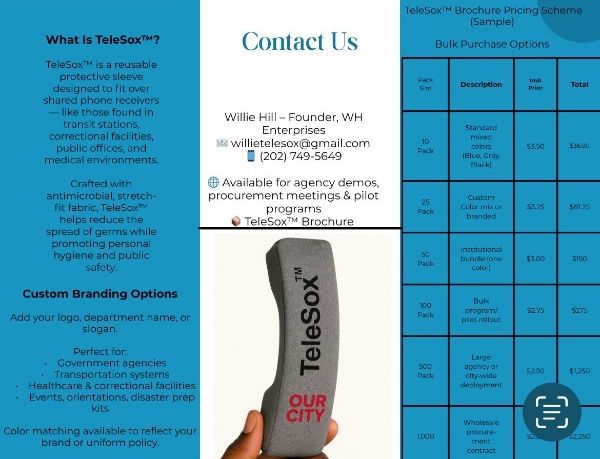
Most recently, Mr. H turned his entrepreneurial spirit toward innovation. After contracting COVID-19 from a shared phone, he saw a gap in workplace health protocols. While workplaces and businesses provide hand sanitizer, disinfectant wipes and even toiled seat covers, there is nothing to protect people from disease spreading through shared telephones. This realization inspired Telesox, a lightweight and reusable protective sock for shared phones designed to prevent the spread of illness.
Made from neoprene and spandex sourced from recycled textiles, Telesox are durable, washable, and eco-friendly—cutting down on disposable wipe waste. Mr. H even went a step further, obtaining a patent for his invention. “Once people understand its purpose, they’ll see it’s the first of its kind,” he said. He’s already shared the concept with hospitality and workplace professionals who see potential for introducing it into their spaces.
Mr. H's story is one of creativity, perseverance, and community. Whether he’s running Haulmasters or developing new ways to keep people safe, he embodies what JPAP’s reentry support is all about—empowering returning citizens to thrive and fully participate in their communities.